Scientific learning
Connect the biological sciences with anesthesia practice.
OUR PROGRAM
Learn about Phebe, the people who shaped its history, and the education that prepares students for practice.
OUR PROGRAM
Phebe’s nurse anesthesia program is based in Suakoko, Bong County, at Phebe-Esther Bacon College of Health Sciences, Lutheran University of Liberia.
Founded in 1975, Phebe has grown from a diploma program into a university-based Bachelor of Science program in Nurse Anesthesia. It joined Lutheran University of Liberia in 2022, and its first 12 bachelor’s graduates completed their studies on April 30, 2024.
Connect the biological sciences with anesthesia practice.
Develop skills through laboratory learning and supervised practice.
Learn within a Liberian-led program supported by international education partnerships.
OUR HISTORY
Phebe’s nurse anesthesia program began as a response to the need for trained anesthesia providers in Liberia. Through disruption, rebuilding, and the transition to university education, its graduates have served hospitals and communities across the country.
Mrs. Carmen Gwenigale, a nurse anesthetist trained in Puerto Rico, established anesthesia training at the Phebe Paramedical Training Program and School of Nursing. Dr. Walter Gwenigale, then Phebe Hospital’s Medical Director and General Surgeon, supported the initiative. Eight nurses trained under her leadership before Liberia’s civil crisis disrupted the program.
Mr. Wilmot Fassah, a graduate of the original program and Phebe’s current program director, reorganized and reopened the school with support from Ms. Nancy Haberstich of the United States. Historical program records document more than 90 nurses trained in anesthesia following the reopening.
Africa Mercy Ship supported the program in 2007–2008, followed by Mothers of Africa Charity in 2008–2014. The Swiss Development Council also contributed to sustaining anesthesia education.
The Global Health Service Partnership began working with Phebe in 2016 through Liberia’s Human Resources for Health initiative, supporting curriculum development, faculty education, and clinical training. Wilmot Fassah and Aaron Sonah participated in advanced anesthesia education in Boston in 2017.
With guidance from Dr. Mary O’Sullivan on alignment with IFNA standards, Phebe’s curriculum was accepted as Liberia’s national nurse anesthesia curriculum in June 2018. An international team visited November 13–15 for an on-site program assessment.
Phebe moved from a hospital-based training program into the Lutheran University of Liberia’s Phebe-Esther Bacon College of Health Sciences, establishing a Bachelor of Science pathway in Nurse Anesthesia.
The first 12 bachelor’s graduates completed their studies on April 30, 2024. Phebe holds IFNA Recognition for May 2024–May 2029.
A new group of students began clinical training at Phebe Hospital in May. In the program history shared in October 2026, the school reports a cumulative 40 graduates with bachelor’s degrees in nurse anesthesia.
Before formal programs developed, anesthesia care relied on foreign-trained professionals and Liberians who learned through supervised practice in operating theatres.
Liberia’s first formal nurse anesthesia school opened in the early 1970s at the Tubman National Institute of Medical Arts, part of John F. Kennedy Medical Center. Limited teaching space, faculty shortages, and national disruption contributed to the program’s closure in the late 1980s.
Dr. Stella Eguma reopened the JFK training program in 2008. It graduated 26 nurse anesthetists before closing at the end of 2011.
After the Ebola outbreak, Phebe was the country’s only nurse anesthesia training program. Providers were unevenly distributed, with many concentrated in Monrovia. Expanding training and preparing providers to serve rural communities became central priorities for the program and Liberia’s Ministry of Health.
Historical account and cumulative graduate figures supplied by the Phebe program in October 2026.
DEGREE & INTERNATIONAL RECOGNITION
May 2024 – May 2029
Phebe holds Recognition from the International Federation of Nurse Anesthetists.
View Phebe’s IFNA profileIFNA Recognition includes a curriculum audit against international nurse anesthesia educational standards.
ADVANCED EDUCATION
Phebe’s faculty describe the program as delivering a master’s-level anesthesia curriculum aligned with International Federation of Nurse Anesthetists (IFNA) standards. The school currently awards a bachelor’s degree, with the lack of a professor qualified with a Doctor of Nursing Practice (DNP) identified by faculty as a barrier to offering a master’s degree.
Supporting advanced faculty education would help Phebe move toward graduate degree offerings and expand educational opportunities for Liberian nurse anesthetists.
CLINICAL EDUCATION
Classroom instruction, simulation, skills development, and supervised clinical experience prepare students for anesthesia practice.
Phebe’s primary clinical training sites include Phebe Hospital, C. B. Dunbar Hospital, and Ganta United Methodist Hospital. Placements expose students to different patients, procedures, and care settings, with supervision from local educators and support from visiting nurse anesthetists.
Clinical affiliations have also included John F. Kennedy Medical Center, ELWA Hospital, St. Joseph Catholic Hospital, the MSF-France Children’s Hospital, J. J. Dossen Memorial Hospital in Maryland County, and other participating facilities.
Agreements with clinical partners support student placements and connect academic teaching with practical experience. Available placements depend on current program arrangements.
In Liberia, nurse anesthetists contribute to patient assessment, airway management, resuscitation, emergency care, and aspects of critical care, alongside their work in operating theatres. Graduates also support clinical leadership, mentorship, and the development of healthcare services.
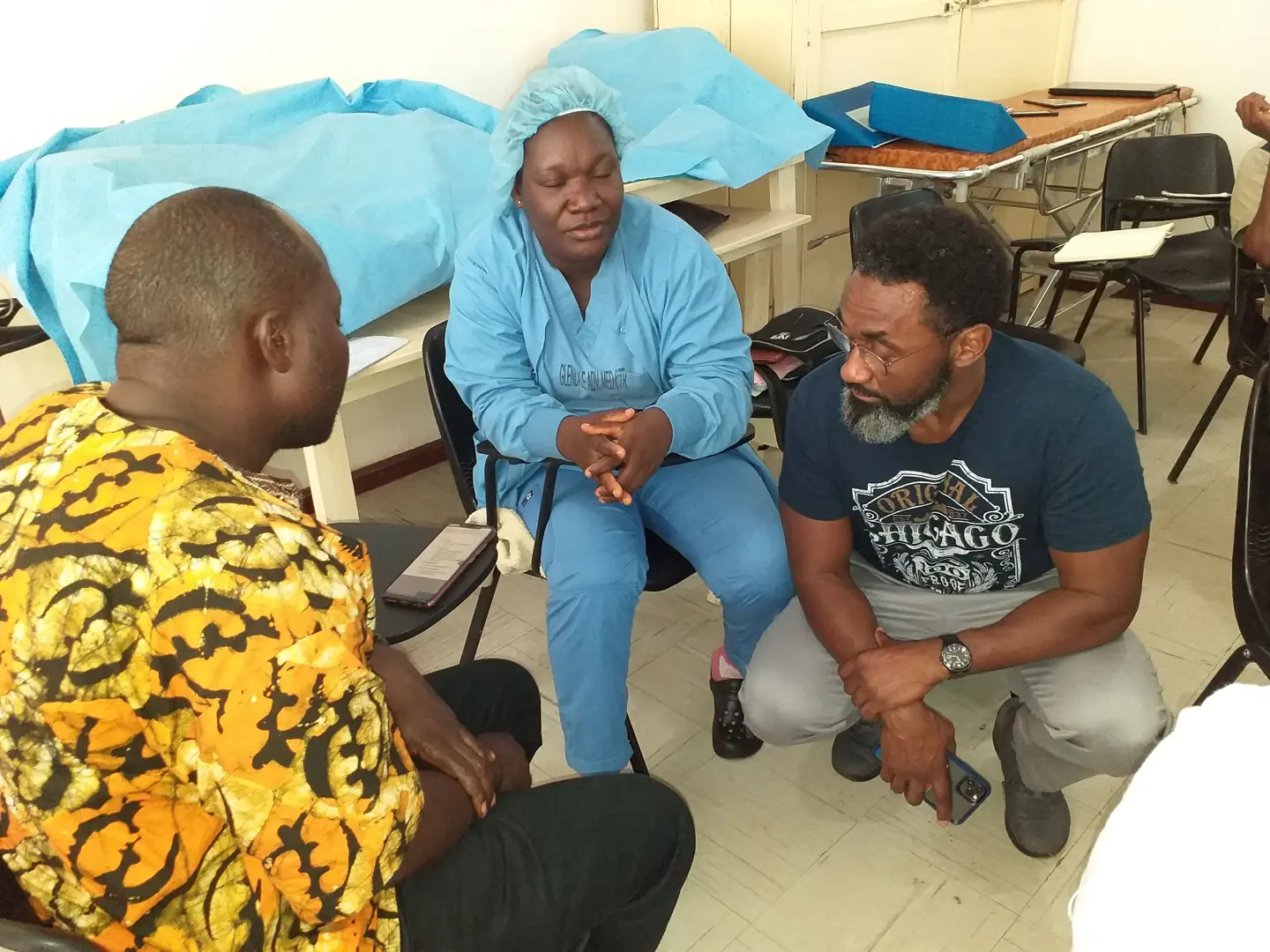
2019
Dr. Donnell Carter working with Phebe learners during a teaching session.
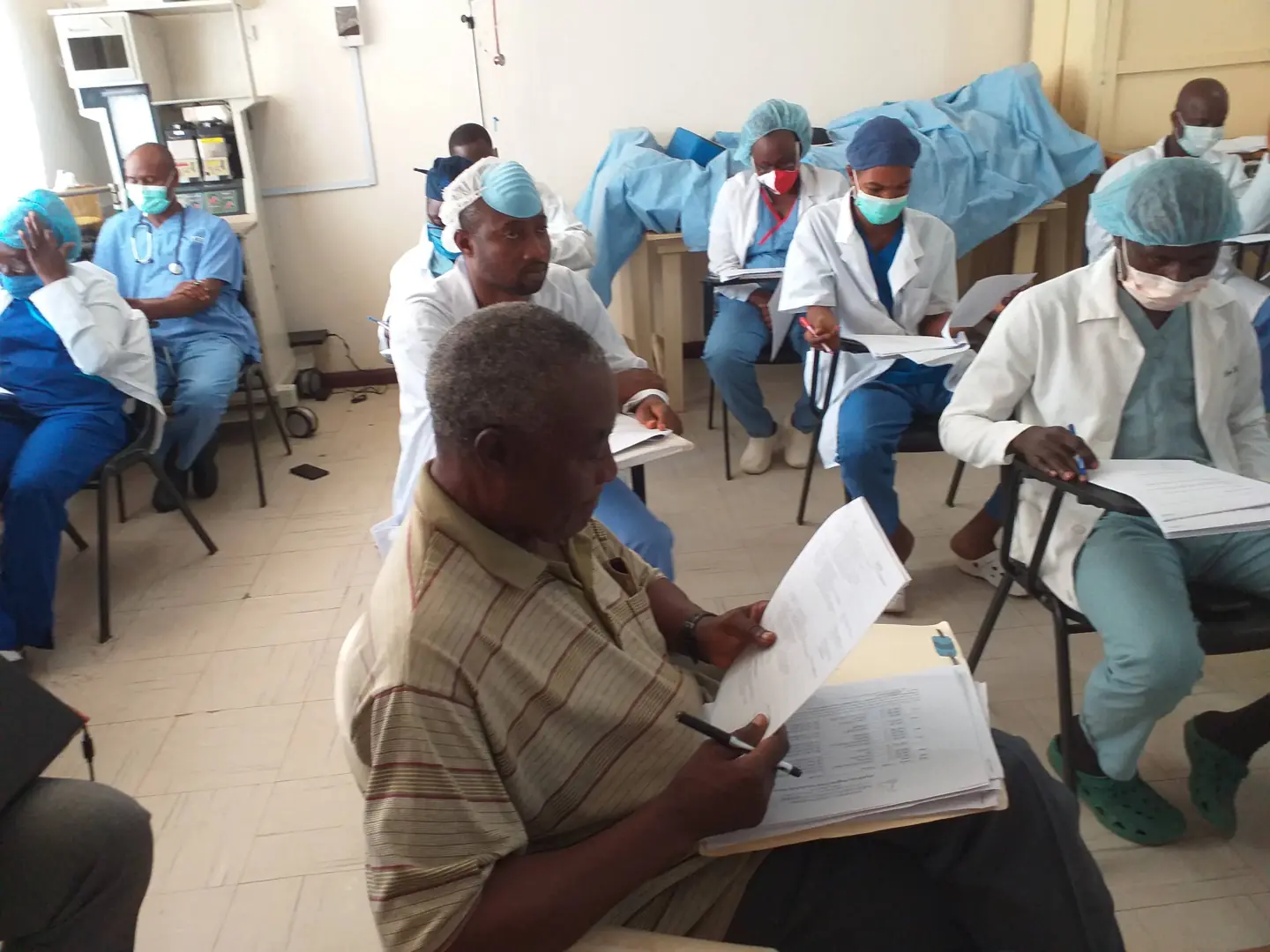
2020
Program director Wilmot M. Fassah leading a teaching session with students.
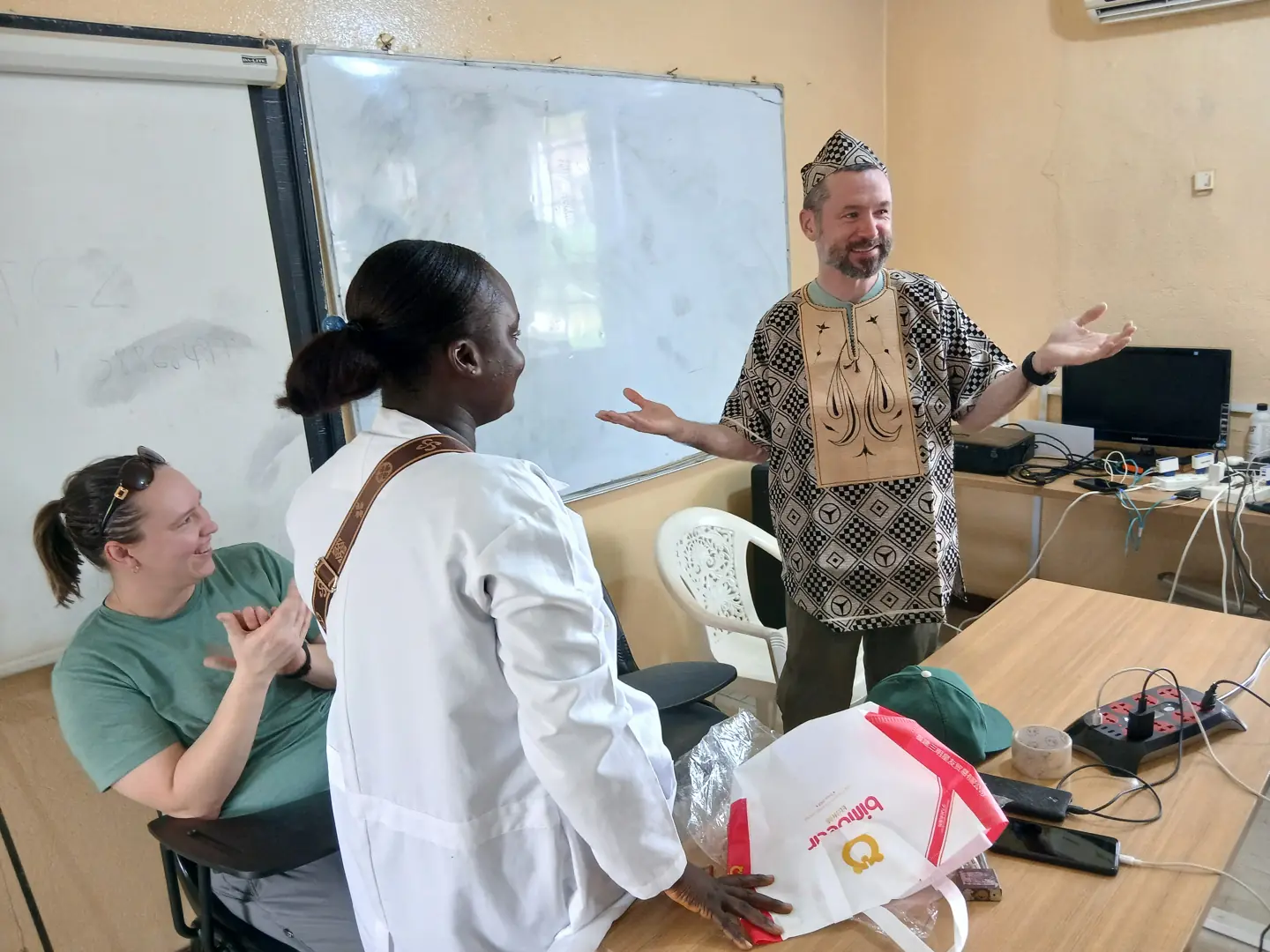
2026
Phebe learners and visiting Michigan educators practicing with simulation equipment.
ANESTHESIA IN LIBERIA
Our faculty estimate that Liberia currently has approximately 120 anesthesia providers serving a population of about six million. They identify a long-term need for approximately 1,000 providers to support operating rooms, intensive care units, emergency departments, and ambulance services.
Nurse anesthesia training is rigorous and demanding. Many students struggle to cover tuition, living expenses, and transportation to clinical placements. Some receive institutional scholarships, but others must fund their education themselves when promised support does not arrive. Reliable scholarships and practical support help students complete their training.
Learn about student financial support
Safe anesthesia depends on trained, committed providers who have the medications, equipment, and supplies they need. Shortages of these essential resources remain a major challenge to providing dependable care.
Phebe continues to strengthen its program and work toward international standards. We are grateful to our Michigan colleagues and international partners for their continued support. Our priorities include student scholarships, clinical training resources, and funding for advanced faculty education, including suitable online doctoral programs.
Workforce estimates and development priorities shared by Phebe faculty in October 2026.
Connect with PhebeEDUCATION PARTNERSHIPS
Following the Global Health Service Partnership’s work in Liberia, Dr. Eileen Stuart-Shor continued supporting anesthesia education through the Boston-Africa Anesthesia Collaborative, working with Boston colleagues and partners in Liberia, Rwanda, and Eswatini.
The collaborative supports joint teaching by Liberian and international instructors, faculty development, clinical placements, and student transportation. Its practical contributions have included school-bus repairs, fuel, and student allowances for clinical rotations in Ganta.
Tablets, electronic books, and educational videos help students continue learning when internet access is limited. Support for internet connectivity also makes monthly anesthesia grand rounds available to participating hospitals.
A Michigan-based team led by Conor Early and Liberian-American anesthesia professionals, including Mr. Neda Jallah, have contributed teaching materials, educational support, and internet access, while helping connect Liberian nurse anesthetists in the United States with students and faculty at Phebe.
These partnerships support local teaching capacity and the program’s goals for advanced education, working alongside university leadership, Liberia’s Ministry of Health, the Liberian Association of Nurse Anesthetists, and clinical partners.
Faculty development priorities · Discuss an education partnership
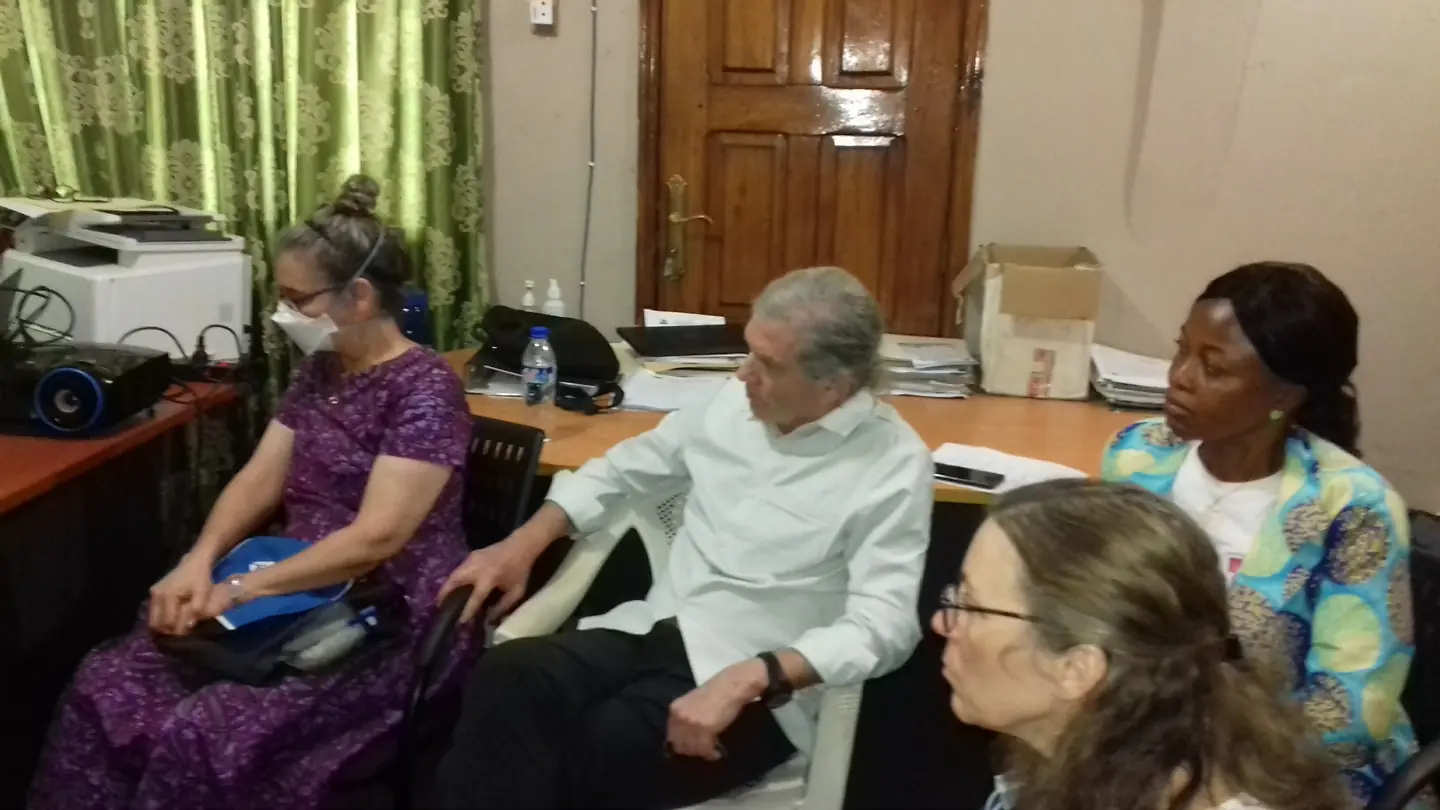
2022
Boston-Africa Anesthesia Collaborative and Phebe colleagues meeting with the Liberian Board of Nursing and Midwifery.
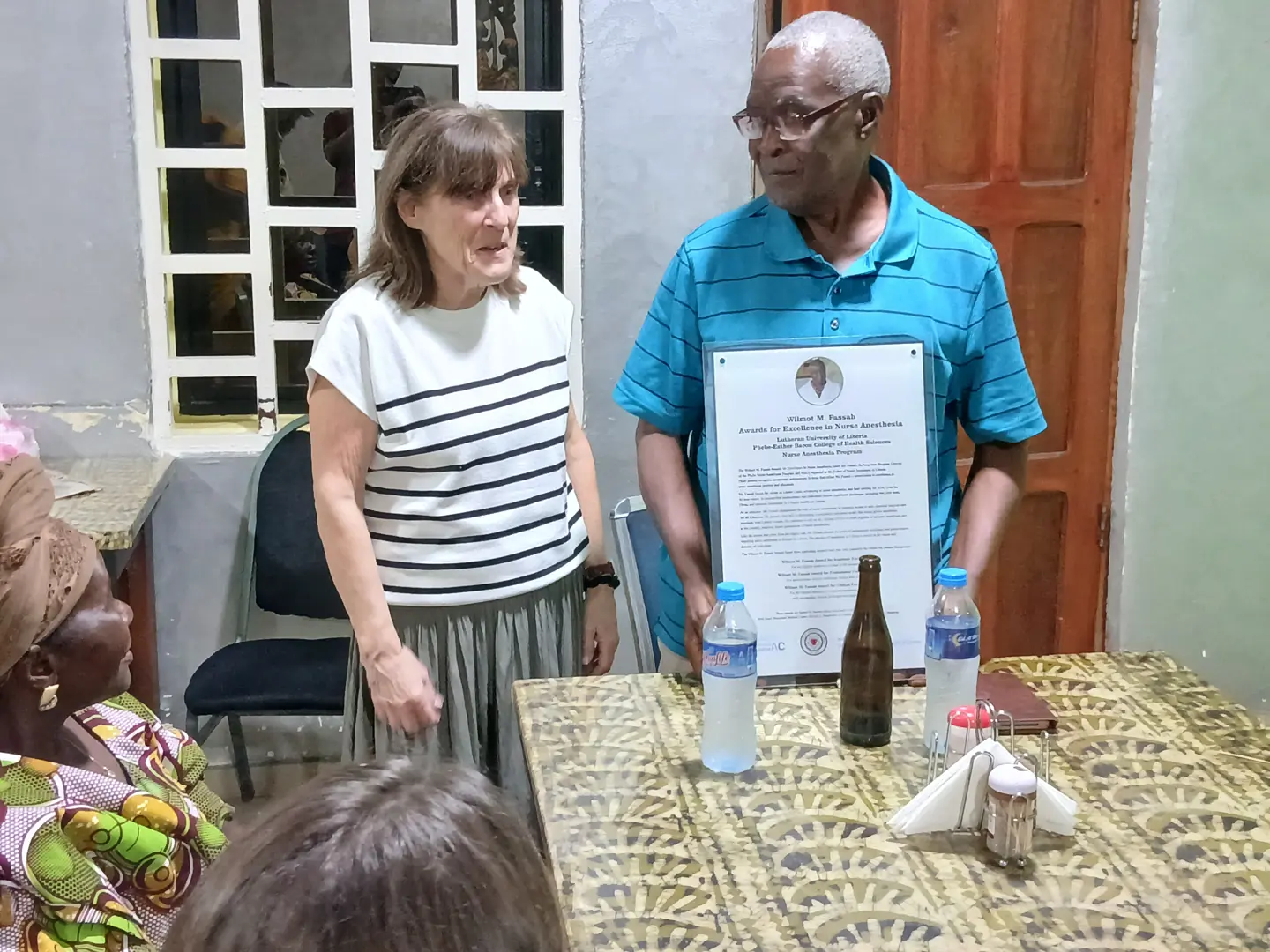
2026
Dr. Eileen Stuart-Shor and Wilmot M. Fassah during a visit to Phebe.
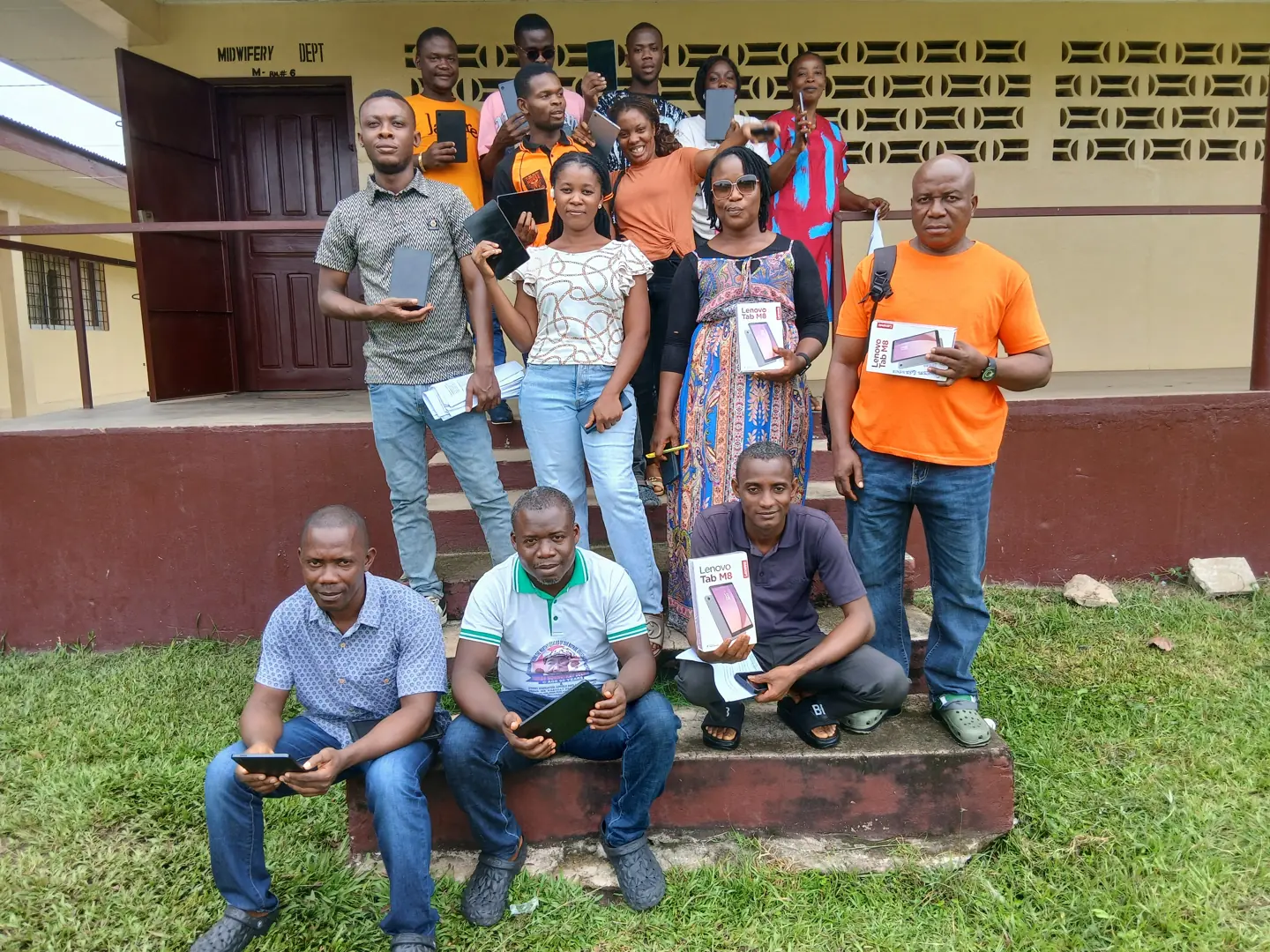
2026
Phebe students with tablets provided by the Boston-Africa Anesthesia Collaborative.
LEARNING & PROFESSIONAL DEVELOPMENT
Phebe-Esther Bacon and BIDMC host monthly virtual anesthesia grand rounds, bringing together students, faculty, clinicians across Liberia, and international colleagues for case discussions.
For invitations, contact Aaron Sonah for participants in Liberia and Patricia O’Connor for participants outside Liberia.
The Boston-Africa Anesthesia Collaborative supports learning with tablets, internet access, co-teaching, and transport to clinical training sites.
COMMON QUESTIONS
Phebe currently awards a bachelor’s degree in nurse anesthesia. The first bachelor’s cohort graduated in April 2024.
Faculty describe the curriculum as master’s-level and aligned with IFNA standards. Learn about Phebe’s path toward graduate education.
Phebe holds IFNA Recognition for May 2024–May 2029. Learn more about the program’s international recognition.
The nurse anesthesia curriculum spans two years and four semesters. Contact Phebe to discuss your entry qualifications and the full degree requirements.
Start with the Lutheran University admissions page and contact the program for the current anesthesia intake and submission instructions. Applications are not collected on this website.
FURTHER READING
CONNECT WITH PHEBE
Contact Phebe for admissions guidance, program information, and education partnerships.
Lutheran University of Liberia
Phebe-Esther Bacon College of Health Sciences
P.O. Box 10-104
Suakoko, Bong County, Liberia